

Bollywood Bliss with Statistical Twist – Part 2. If you haven’t read the part 1 yet – please read it here. The story will flow better for you.
As the anticipation hung thick in the air, Professor Kelloy, with an air of gravitas, handed back the test results that had the power to redefine our academic journey. The weight of disappointment settled in as the scores on the paper confirmed our collective dread. All of us, except two students, a substantial majority, had not just fallen short by American grading standards (less than 70 out of 100), but we had veered into the realm of outright academic disaster in the Indian context (where a passing grade might start at 35 out of 100). My own score, a mere 31 out of 100, felt like a harsh awakening. It was a score that echoed the somber reality of our statistical misadventure.
In this dismal tableau of failing grades, a Turkish girl emerged as the reluctant victor, scoring 78 (still a C grade by American standards). The only other Indian who had abstained from our cinematic escape, a PhD student, fared slightly better with a score of 71. As the scores painted a tale of collective struggle, underscoring the fact that our academic road ahead was paved with challenges and lessons yet to be learned.
In the aftermath of our statistical debacle, we, the seasoned engineering students accustomed to the art of “calibrating” in the Indian education system, clung to a faint glimmer of hope. In our world, calibrating meant adjusting the grading curve based on the collective performance of the class rather than the absolute scores obtained. With only two students managing to scrape past the 70-mark, which was nothing more than a modest C grade, we harbored illusions that Professor Kelloy would somehow extend a lifeline to the drowning majority.
Some notorious “brave amongst us” gathered the courage to confront Professor Kelloy, sheepishly proposing the possibility of a grading curve to salvage our academic reputations. However, our plea was met with a resounding “No.” His response, delivered with a matter-of-fact finality, crushed the remnants of our optimism. “I can’t do that. Do better in the next tests.” It was a clear reminder that in this new academic realm, there was no room for clemency or recalibration.
As the reality of our statistical misfortune sank in, the supposed math wizards among us, who had proven to be less adept in statistics than we thought, began crunching the numbers once again. The simple arithmetic of the situation painted a bleak picture. Even if, by some miraculous twist of fate, some of us managed to score a perfect 100 in both the remaining tests, the cumulative marks would not reach the magical number 210—the bare minimum for C grade, the elusive passing grade in the class. For me, yes, I would cross the barrier of 210 in that scenario, but who I was kidding? I scored a mere 31 in the first test, so scoring a ‘perfect score’ in remaining tests was only a mythical reality.
The weight of this realization hit hard, since as international students, maintaining at least a passing grade was not just a desire but an obligation. Failure in any class could potentially jeopardize the very foundation of our American academic dreams. Here I was, living the dream of a lifetime by studying in America, and yet, the haunting specter of failure in my very first semester threatened to shatter that dream. The shame of potentially being shown the academic exit door loomed large, and the weight of this consequence left me grappling with the harsh reality that my American dream was on the brink of unraveling.
In the desperate pursuit of a lifeline, some of us clung to another thin thread of hope, or perhaps call it sheer stupidity. A group decided to take matters to the dean, seeking clemency or some form of resolution, given that a staggering 98 percent of the class had met the same dismal fate. However, our plea for mercy hit another brick wall, as the answer echoed a resounding “No.”
The dean, also in a matter-of-fact tone, explained that Professor Kelloy was the captain of the statistical ship, holding full authority to navigate it as he saw fit. If he deemed that most of us (except the two) should bear the brunt of failure, then so be it. The dean made it clear that there was nothing he could or would do to overturn the decision.
Despite my initial dissatisfaction with the response, it served as a poignant revelation about the straightforward nature of the American way of working. It was as black and white as it could be—no room for higher-up interventions or gray areas.
In a surprising turn of events, Professor Kelloy, perhaps sensing the collective desperation of the class, extended an unexpected lifeline. He decided to grant us a reprieve by transforming the next two tests into 135-point affairs each, offering a substantial 35 extra points for redemption.
This newfound opportunity served as a vivid reminder of the old adage: when someone forgives your mistake, be grateful and work extra hard to make amends. The initial weeks of revelry in America were fun, but the first mid-term was a wake-up call. It was time to put aside the early missteps, hit the books with renewed vigor, and recalibrate the probability of salvaging a passing grade.
With that in mind, I delved into my studies, determined to turn things around. It was a grueling process, but the hard work paid off. The C grade in that class became a badge of honor, the only blemish in an otherwise impeccable record of straight A’s across 12 total master’s classes.
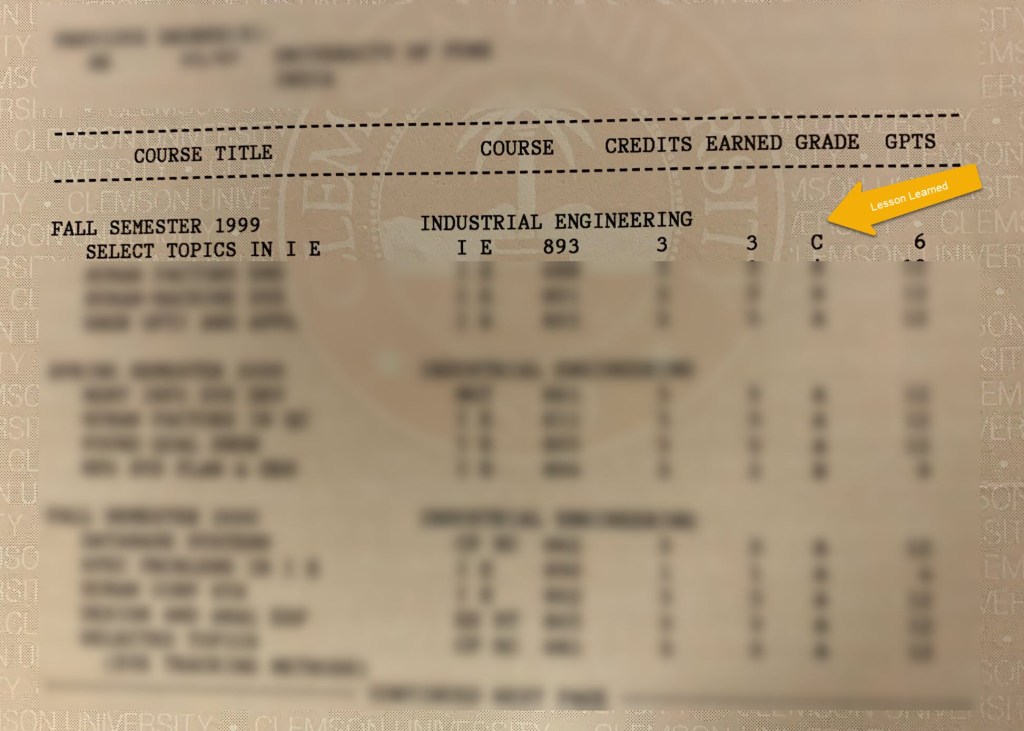
Karma, it seemed, had a way of teaching valuable lessons, when life throws you a curveball, redemption is not just an opportunity—it’s a testament to your ability to rise above the challenges and emerge stronger on the other side.
Since that day, mastering the art of discerning between leisure and focused work (or study) has become a crucial revelation for me and has served me well. Thank you, Professor Kelloy!
Liked this? Please subscribe and get new stories 2–4×/month. No spam, just clarity and a smile.
Want help turning ideas into action? I run mPath Services: empathy + execution and hands-on help for solopreneurs or anyone needing a bit more TLC. Visit mPath →
Want to just say hello? drop me a note at: mandar@mpathservices.com or contact me →
 Hyphenated-Homestead
Your thoughts? (& name) – I promise, I will respond promptly 🙌