
I recently listened to one very informative video about digital transformation, and thought I would summarize what I learned at a high-level in this blog piece.
The instructor spoke about how the pace of business has changed dramatically in the last decade.
The mighty are falling even faster now, as the average tenure of the S&P 500, which was 61 years in 1958, is less than 16 years today. Also, the average Fortune 500 business takes roughly 20 years to reach a billion-dollar evaluation. Uber, WhatsApp, Snapchat, Oculus Rift, each took less than four.
All of this means that digital immigrant organizations, those who were born prior to the digital age, need to think more like the digital native companies, like the ones above. Where the older companies go wrong is to be complacent in the face of this dramatic change.
Digital transformation requires four things.
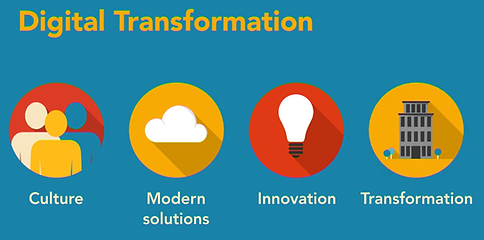
First, it’s necessary to digitize your culture. This requires hiring for and encouraging learning agility among your employees. New technologies and techniques emerge much faster than in the past. The technology that one is comfortable with today may be obsolete tomorrow. Will your employees be willing to retrain on the more modern technologies and techniques?
Second, it’s necessary to use modern solutions, such as Cloud and mobile-enabled technology rather than mainframe technology of the past. This internal component of digital transformation is often an afterthought. But not taking these first steps can mean that you’ll be a victim of your own success, unable to reap the rewards that higher demand might bring.
Third, it’s necessary to develop or hone an edge-based innovation function. This entails developing or recasting an existing research and development arm. Seeking new business opportunities that exploit digital technologies at the edge of current product or service offerings, or perhaps in adjacent spaces to the current offerings. It’s important to give this team the liberty to explore opportunities that might cannibalize the existing business as well.
Fourth, the rest of the business should think further about how digital opportunities can transform the core business. An eye toward better customer experience through digital channels should be paramount, as customers expect easier, intuitive, and compelling digital experiences when they become more sophisticated. They expect that you will have anticipated their desired journey through your offering.
The digital revolution that’s upon us is an enormous threat to a lot of businesses, but it also can be a tremendous opportunity for those who leverage the new ways of operating.
Editor’s Note (2025):
This post originally appeared on my previous blog, OptimizeProdUX, between 2016 and 2021. As I evolve my online presence, I’ve archived these older articles here under a special category called User Experience (UX) — preserving content I still value while retiring the old site.
These posts remain untouched in their original form and reflect my work and perspective from that period. I’ve added them here quietly, without promotion, for continuity and future reference.
Feel free to explore them through the lens of time — they’re a part of my story, and maybe yours too.
#optimizeprodux
Liked this? Please subscribe and get new stories 2–4×/month. No spam, just clarity and a smile.
Want help turning ideas into action? I run mPath Services: empathy + execution and hands-on help for solopreneurs or anyone needing a bit more TLC. Visit mPath →
Want to just say hello? drop me a note at: mandar@mpathservices.com or contact me →
 Hyphenated-Homestead
Your thoughts? (& name) – I promise, I will respond promptly 🙌